
─ writingWriting is where the thinking happens out loud — the essays beneath the paintings and the engine. Part philosophy, part field report: what abstraction is, how it reaches what language can’t, and why a painting and a listening machine turn out to be one doorway, walked both ways.
On Abstraction — Essays from the
Studio and the Engine
What Rothko Could Only Do With a Dimmer Switch
Mark Rothko spent his last decade refusing to be sorted — not a colourist, not an abstractionist, not anything you could file. He wanted the work sorted by the encounter, and reached for the dimmer switch because he had no word for it. A case for describing the half he could only guard with darkness.
The Second Person
A painting stops and someone asks what it is. I have been failing that question for six years. The answer turned out not to be a better description of the work. It was a grammar that hands the arising to another person.

Abstraction Is Not a Destination
Everyone thinks abstraction is what's left when you take the world away. It's the opposite. The ground you come from, not the place you get to.
Curation Isn't the Loop. Authorship Is.
They say the future is human-in-the-loop — the machine runs, and we stand by to approve. But to be in the loop is to be the most important person in a room you did not design. I am not interested in supervising the machine. I am interested in authoring the space it reads within.
The Poem and the 256
I have two vocabularies for the same thing, and I have stopped trying to reconcile them. There are the beautiful words — surrender, transcendence, emergence — and there are the eight that survived contact with 256 real paintings. The distance between them is not a failure. It is the record of the work.
Reading the Field
There is an easy way to describe what I am building, and it is a ladder: read the painting, then the encounter, then — at scale — the field. I want to refuse the ladder. Abstraction does not work by ascent. It works by presence: the whole of it already folded into a single encounter, the way an entire image lives inside every fragment of a hologram.
A Taxonomy That Can Be Wrong
Isn't the feeling a painting stirs simply subjective — one person's awe, another's boredom? It is the strongest objection, and I want to meet it head-on. A framework that names a painting's feeling and then lets real viewers prove it wrong is doing something a poem and a machine both cannot: it can be caught in an error. A measure, not a mood.
The Man Who Walked In
I walked into a room of Rothkos as a particular person, and I do not remember leaving as the same man. This is an account of an afternoon I cannot fully account for — the numbness that was the opposite of absence, the door I walked out of, and the self I could not find waiting on the other side.
What Way of Being Does This Painting Invite?
They say the future is human-in-the-loop — the machine runs, and we stand by to approve. But to be in the loop is to be the most important person in a room you did not design. I am not interested in supervising the machine. I am interested in authoring the space it reads within.
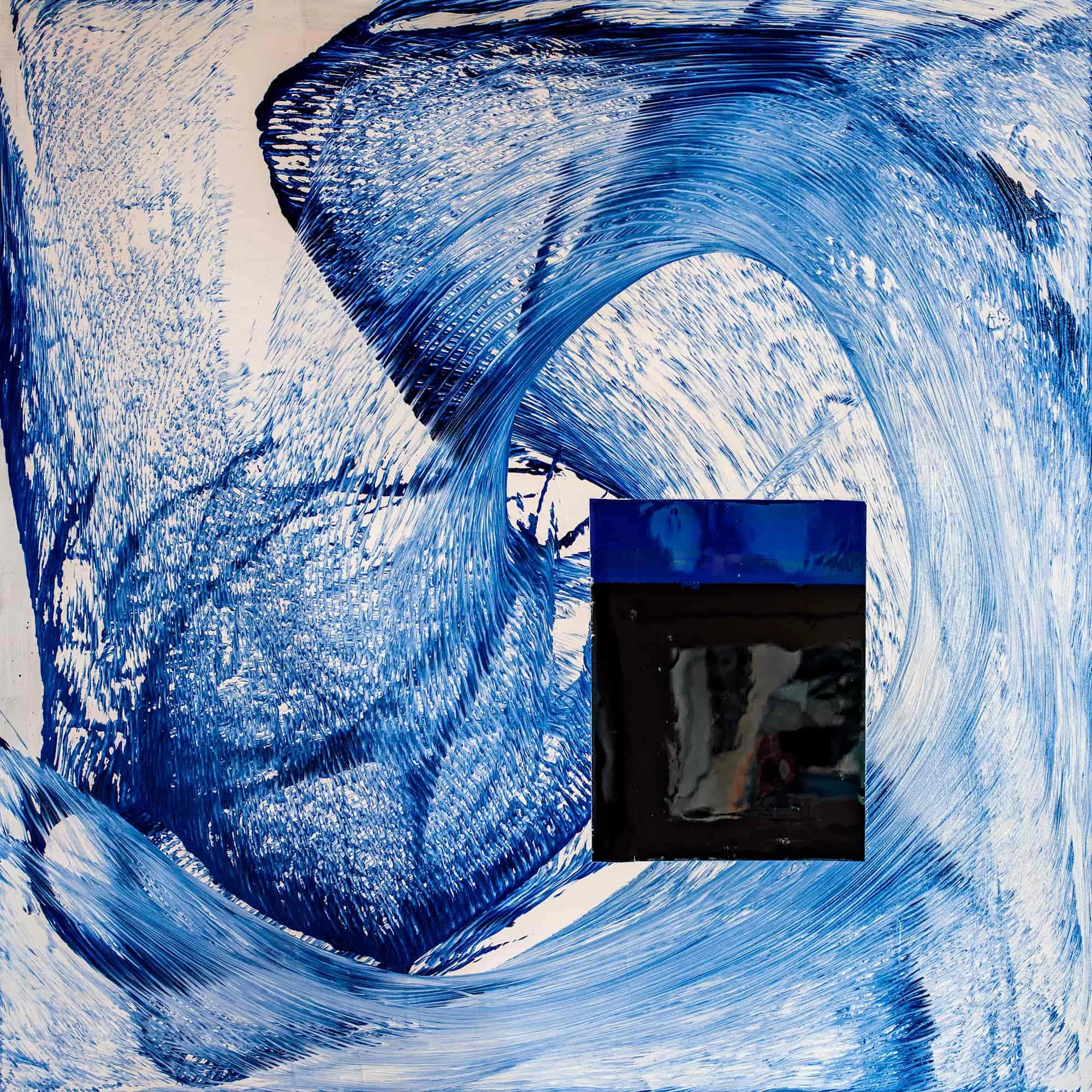
Abstraction as Access
Abstract was never removal — it's a doorway. A reading of Erhard, Husserl, Heidegger, and Wittgenstein on abstraction as access, generated on canvas and drawn out in the engine.