Curation Isn't the Loop. Authorship Is.
Why "keep the human in the loop" is a demotion dressed as a promotion — and what it means to author the space a machine reads in.
There is a question making the rounds that sounds like a gift to people who love art:
Can AI curate the paintings, while humans curate consciousness?
It is a flattering sentence. It hands the machine the mechanical labor — sorting, matching, surfacing — and reserves for us the sacred part: meaning, feeling, the why. Everyone nods. The human is safe. The human is in the loop.
I want to say plainly that I think this is a trap, and a comfortable one, which is the most dangerous kind.
"Human in the loop" sounds like sovereignty. It is closer to supervision. Picture what a loop actually is: a system runs, produces an output, and a person is stationed somewhere along its circuit to check, approve, veto, nudge. The person is real, the person matters — but the person is downstream. They did not decide what the system is for. They did not choose the questions it asks. They arrived after the architecture was poured and were handed a clipboard. To be in the loop is to be the most important person in a room you did not design.
That is not the relationship I have to this work, and I don't think it's the one worth wanting.
The alternative isn't to be in the loop. It's to have written the space the loop runs inside.
When I built the reading system for my catalog, I did not ask a machine what these paintings look like and then stand by to correct it. I decided, first and upstream of everything, what could be asked of a painting at all. That the object could be read along six dimensions and the encounter along three. That the emotional register would have eight names and not eight hundred. That mood belongs to the canvas and feeling belongs to the room, and that the difference between them is load-bearing. None of that was found by a model. It was authored. The machine is genuinely fluent now — fast, tireless, consistent across hundreds of works — but it is fluent in a language I wrote. Its fluency is real. The grammar is mine.
This is the difference between curating and authoring, and it's the whole game. Curation chooses among things that already exist inside a frame someone else built. Authorship builds the frame. A curator with the finest taste in the world, working inside a bad ontology, will produce elegant nonsense. An author of the ontology decides what "good" can even mean before the first choice is made. If you only get to be one, be the author.
Which is why I keep insisting the taxonomy is not curation but translation — and why the "AI curates paintings, humans curate consciousness" framing quietly fails on its own terms. Translation requires two real languages. You cannot translate into a language that has no grammar, no words, no way to be wrong. And that is exactly what the flattering framing does to the human side: it keeps "consciousness" safely ineffable, a shimmering mystery too precious to be systematized. That sounds like reverence. It is actually an excuse. If the human register stays mystical, it never has to be made sayable — and if it is never made sayable, the machine ends up owning the only language that got written down. The visual one. The looks-like one. We will have protected the sacred by rendering it mute.
The harder, less romantic path is authorship: dragging the experiential out of the shrine and into a structure precise enough that a machine can move through it — not to flatten the experience, but to give it standing. A feeling you can name, compare, and check is not a smaller feeling. It is a feeling that finally gets to participate in the world of things we can build on.
I did not come to this idea from nowhere. My father was an art critic — he spent his life giving language to a generation of Indian modernists who might otherwise have been seen through borrowed European eyes or not seen clearly at all. He was never "in the loop" of their work. He wrote the frame through which the work would be encountered. Criticism, done at that level, is not commentary downstream of art. It is authorship of how the art gets to be met. I understood the inheritance late, but I understand it now: the task was never to supervise the seeing. It was to author it.
So here is the reframing I'd offer in place of the flattering one.
The future is not human-in-the-loop. It is human-as-author, machine-as-reader-of-what-the-human-authored. The machine will out-see us on the surface — palette, texture, geometry — and that's fine, because the surface was never the seat of meaning. Our work is upstream of all of it: deciding what a painting can be asked, what an encounter can be named, what way of being a body of art is even capable of inviting. Let the machine be brilliant in the loop. We'll be busy writing the space the loop runs in.
The loop is oversight. Authorship is origination. Only one of them is ours to keep.
Frequently asked questions
What does "human in the loop" mean in AI systems? It refers to keeping a person positioned to review, approve, or override a machine's outputs. The person adds judgment and accountability, but they typically act downstream of a system whose purpose and structure were already decided. In that sense the human supervises a process rather than authoring it.
What is the difference between curating and authoring in AI-assisted art? Curation selects among options inside an existing frame; authorship builds the frame itself — the questions that can be asked and the terms in which answers are given. A curator working inside a poorly designed system can only produce refined versions of its limitations, while the author of the system decides what "good" can mean before any selection happens.
What does "translation, not curation" mean in the Taxonomy of Abstraction? It means the framework's job is to carry the experience of an abstract painting from one language (the felt encounter) into another (a shared, precise vocabulary) without losing it. Translation requires both languages to genuinely exist, which is why the human, experiential side has to be made sayable rather than left as an untouchable mystery.
Can AI curate abstract art? AI is increasingly capable of sorting and relating abstract works by visual features such as palette, texture, and composition. What it cannot do is originate the framework that decides which questions are worth asking of a painting or what an encounter should be measured against — that authorship remains a human act, and it is the more consequential one.
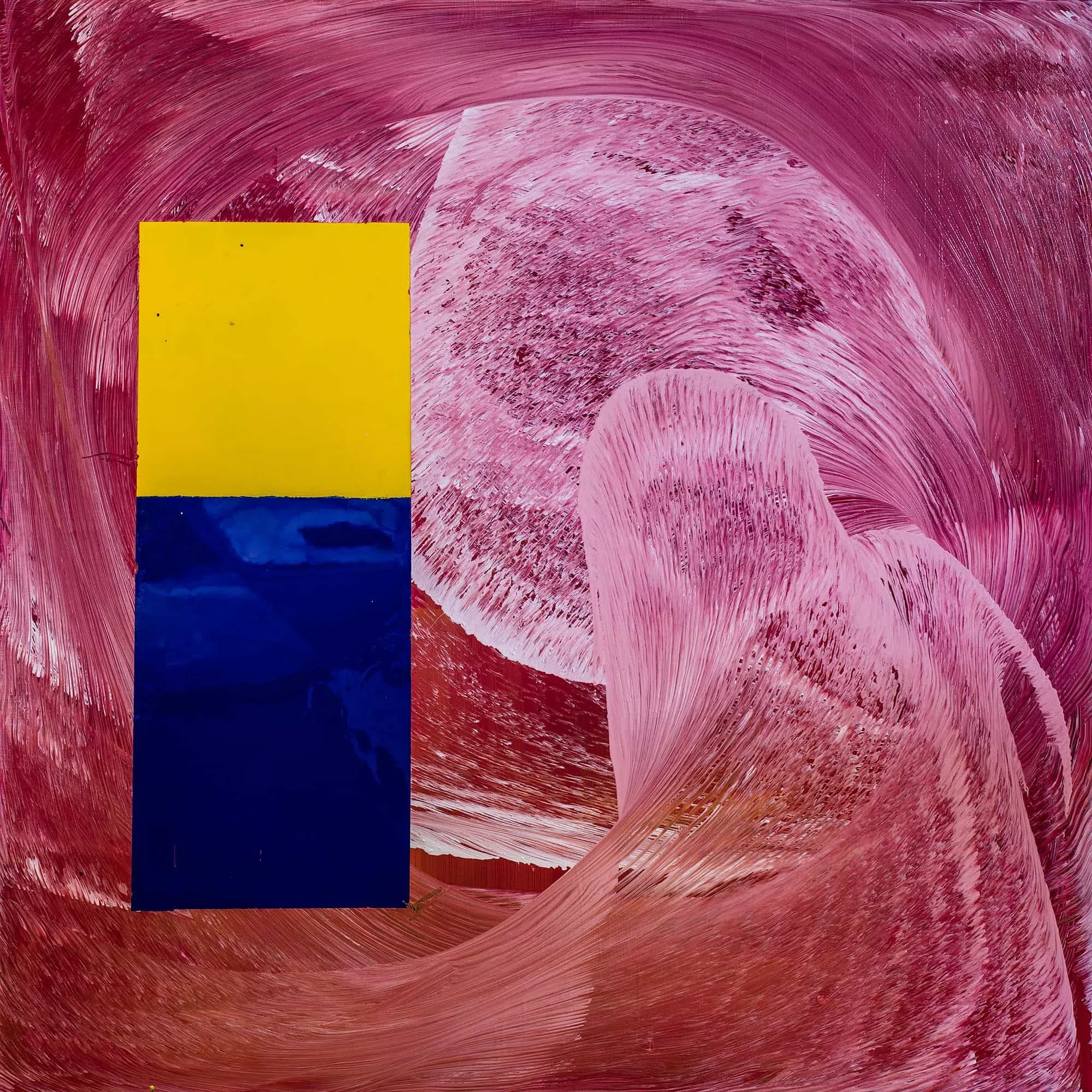
Passage of the Blue