A Taxonomy That Can Be Wrong
On subjectivity, falsifiability, and the difference between a mood and a measure.
Whenever I describe a system for reading the feeling of an abstract painting, someone raises the strongest possible objection, and they're right to. It goes like this:
Feeling is subjective. A Rothko dissolves one person into awe and leaves the next one checking their phone. The color field doesn't change between them — the person does. So any taxonomy that claims to read the emotional register of a painting isn't reading the painting at all. It's reading you. And a system that dresses one man's private responses up as a classification isn't science or scholarship. It's autobiography with a schema on top.
I want to take that objection at full strength, because the usual reply — ah, but art is subjective and that's the beauty of it — is a dodge, and everyone can feel that it's a dodge. So let me not dodge.
The objection is partly correct. The encounter is relational. I have never claimed otherwise; the entire framework is built on the distinction between what belongs to the canvas and what happens in the room. Feeling, by definition, happens in the room, between a specific painting and a specific person. It is not a property sitting on the surface waiting to be scanned.
But "relational" is not the same word as "arbitrary," and the whole question is whether you can tell the two apart. Here is the move that does it.
The framework commits. For every painting in the catalog, it doesn't murmur that the work might evoke something for someone someday. It asserts a specific claim: this one invites longing. That one, defiance. This one, awe. A hedge cannot be wrong. An assertion can. By naming a painting's dominant feeling out loud and in advance, the taxonomy puts something at risk — and putting a claim at risk is the price of it meaning anything at all.
And then I built the thing that collects the evidence against it.
Every viewer who moves through the work can register what the encounter did to them. Those responses accumulate against each painting's asserted feeling — the claim the framework made, held up against what people actually report undergoing. I gate it deliberately: a painting isn't allowed to speak with confidence about its own feeling until enough people have answered — a real threshold, not one or two voices, so that a stray mood or a single outlier can't masquerade as a pattern. Below the line, the reading stays provisional. Above it, the painting has earned the right to claim what it does.
Notice what this makes possible. It makes the taxonomy falsifiable. It can assert that a painting invites reverence and then discover, across enough honest responses, that people keep meeting it with restlessness instead. When that happens, the reading was wrong, and the reading changes. The framework is built to be corrected by the world.
This is the whole difference, and it's a philosophical one before it's a technical one. A claim that cannot possibly be wrong is not strong. It's empty. This is the oldest test we have for whether an idea is doing real work: does it stick its neck out far enough that reality could cut it off? A poem about a painting can't be wrong — it isn't that kind of statement, and it doesn't need to be. A purely visual classifier can't be wrong about feeling either, but for the opposite and less noble reason: it never ventures a feeling at all, so it's never exposed. My taxonomy sits in the uncomfortable, honest middle. It asserts, and then it submits.
That is what separates a measure from a mood. A mood is unfalsifiable by nature — it asks only to be shared. A measure makes a claim and accepts the possibility of being caught out. When I say a painting invites longing and forty people quietly agree by their own report, that agreement is not proof the feeling is "objective." It's something better suited to the actual world: evidence that the reading generalizes beyond me. And when they don't agree, I don't get to keep my beautiful sentence. The painting overrules the author. That, more than any manifesto, is why I trust the system — not because it's always right, but because it is the kind of thing that could find out it was wrong.
This is also, bluntly, the difference between a manifesto and infrastructure — and it matters for where this work is trying to go. A manifesto asks to be believed. It is a beautiful closed thing; you either share its faith or you don't. Infrastructure asks to be used, and it earns trust not by being eloquent but by being correctable. The institutions that might one day build on a taxonomy of abstraction — the houses, the platforms, the archives — do not need another gorgeous theory of feeling. There are shelves of those. What they've never had is a reading of the encounter that behaves like an instrument: one whose claims you can trust precisely because the instrument is capable of catching itself in an error and adjusting.
So the strongest thing I can tell you about this taxonomy is not that it is true. "True" is what manifestos promise. The strongest thing I can say is this: it can be shown false, painting by painting, feeling by feeling — and so far, held against real people meeting real work, it hasn't collapsed.
A mood only wants your agreement. A measure risks your disagreement and survives it. I am trying, as carefully as I can, to build the second thing.
Frequently asked questions
Isn't a taxonomy of emotional response to art inherently subjective? The emotional encounter is relational — it happens between a specific painting and a specific viewer — so it is not a fixed property of the surface. But relational is not the same as arbitrary. A framework becomes more than subjective when it makes explicit claims about a painting's dominant feeling and then tests those claims against how many viewers actually report experiencing them.
How can a classification of feeling be falsifiable? By committing to a specific claim in advance — asserting that a given painting invites a particular emotion — and then gathering viewer responses that could contradict it. If enough people consistently report a different feeling than the one asserted, the reading is wrong and gets revised. A claim that can be contradicted by evidence is falsifiable.
How does the sentiment system check the taxonomy? Viewer responses to each work are collected and held against the feeling the framework asserted for that work. A painting's reading is only treated as confident once a threshold number of responses has accumulated, so that isolated or outlier reactions cannot masquerade as a pattern. Readings that fail to match reported experience are corrected.
What makes an art framework infrastructure rather than a manifesto? A manifesto asks to be believed and is judged by whether you share its conviction. Infrastructure asks to be used and earns trust by being correctable — its claims can be checked, and it can catch and fix its own errors. That correctability is what lets institutions build on it.
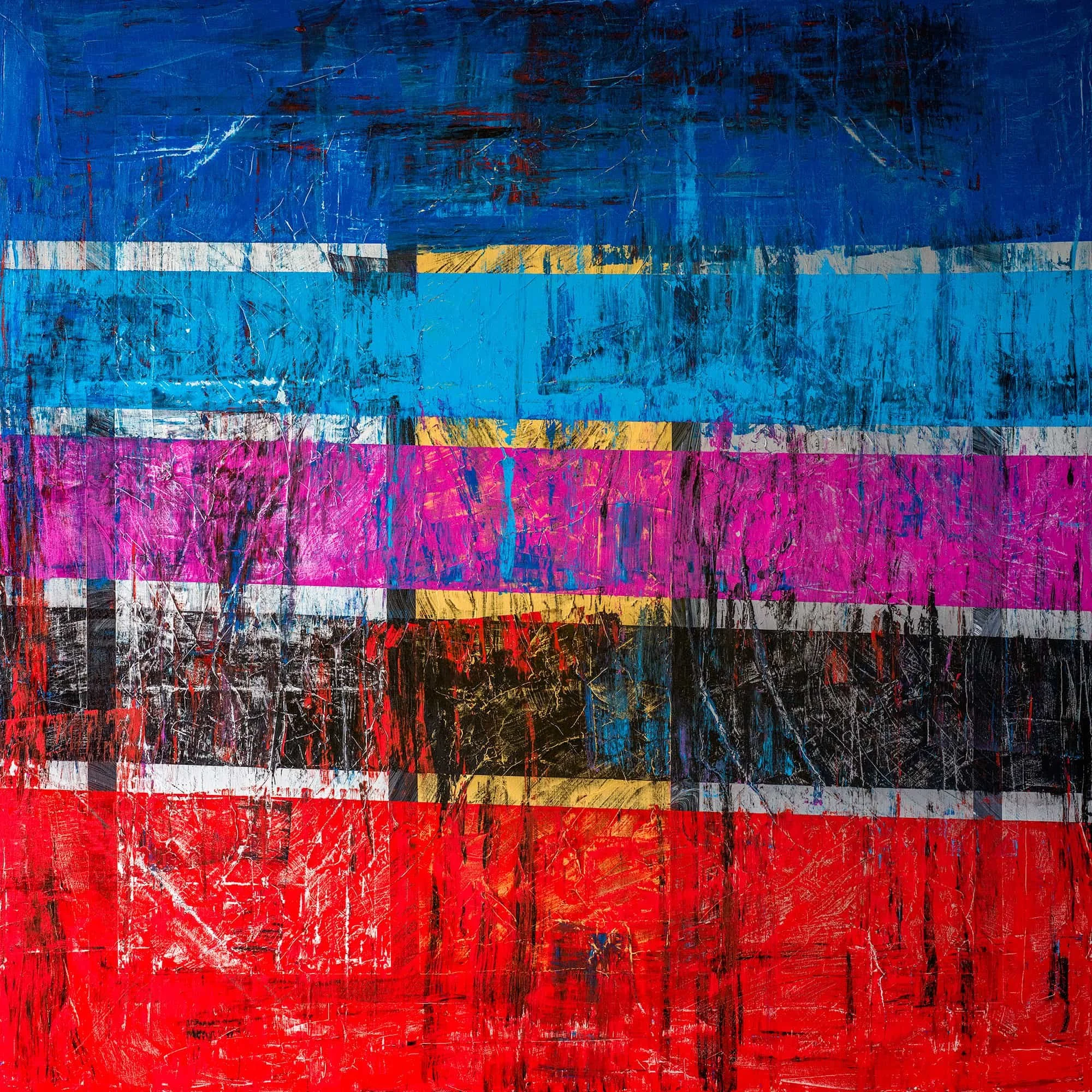
Color Bands of Tension