
─ writingWriting is where the thinking happens out loud — the essays beneath the paintings and the engine. Part philosophy, part field report: what abstraction is, how it reaches what language can’t, and why a painting and a listening machine turn out to be one doorway, walked both ways.
On Abstraction — Essays from the
Studio and the Engine
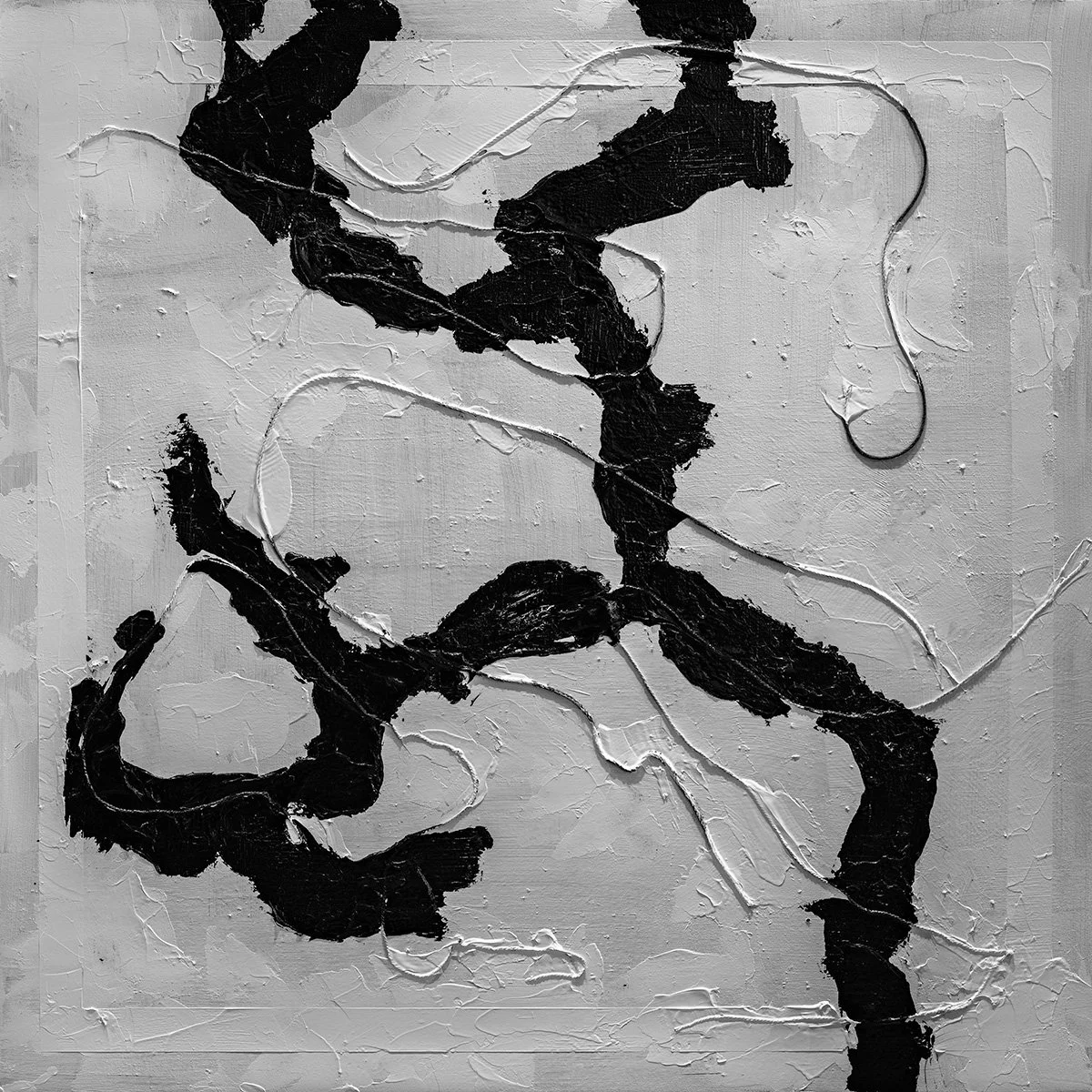
The Second Person
A painting stops and someone asks what it is. I have been failing that question for six years. The answer turned out not to be a better description of the work. It was a grammar that hands the arising to another person.
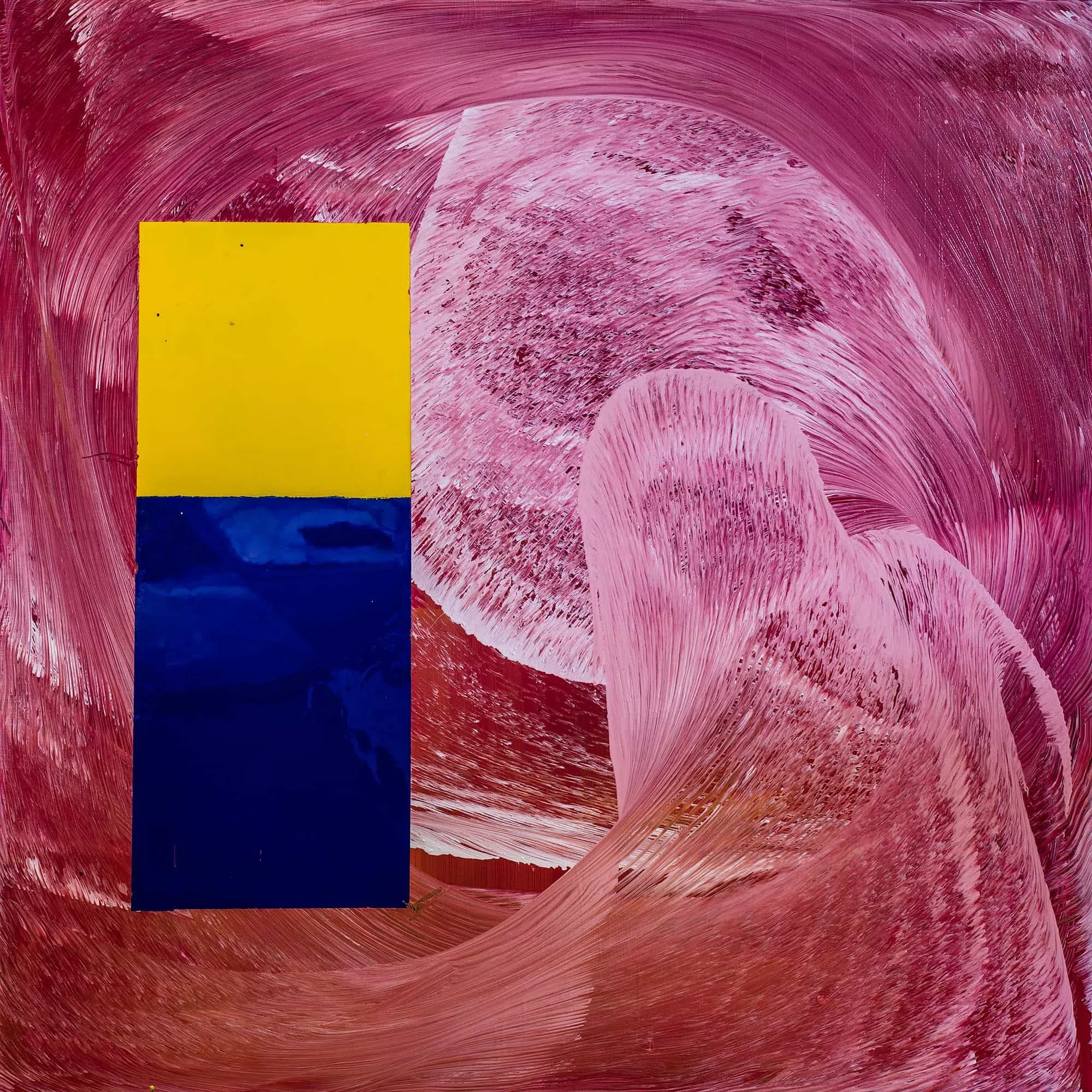
Curation Isn't the Loop. Authorship Is.
They say the future is human-in-the-loop — the machine runs, and we stand by to approve. But to be in the loop is to be the most important person in a room you did not design. I am not interested in supervising the machine. I am interested in authoring the space it reads within.
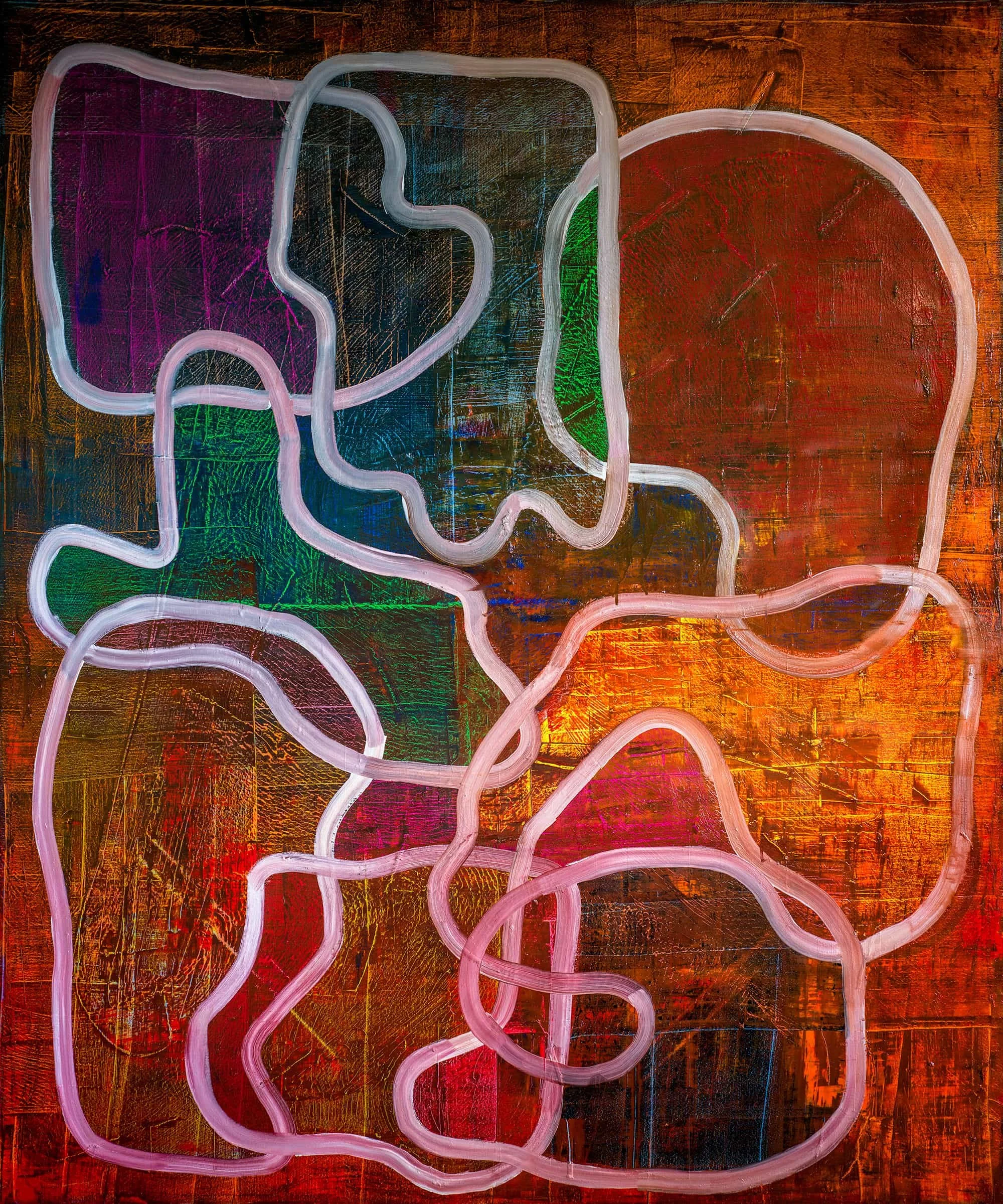
The Poem and the 256
I have two vocabularies for the same thing, and I have stopped trying to reconcile them. There are the beautiful words — surrender, transcendence, emergence — and there are the eight that survived contact with 256 real paintings. The distance between them is not a failure. It is the record of the work.
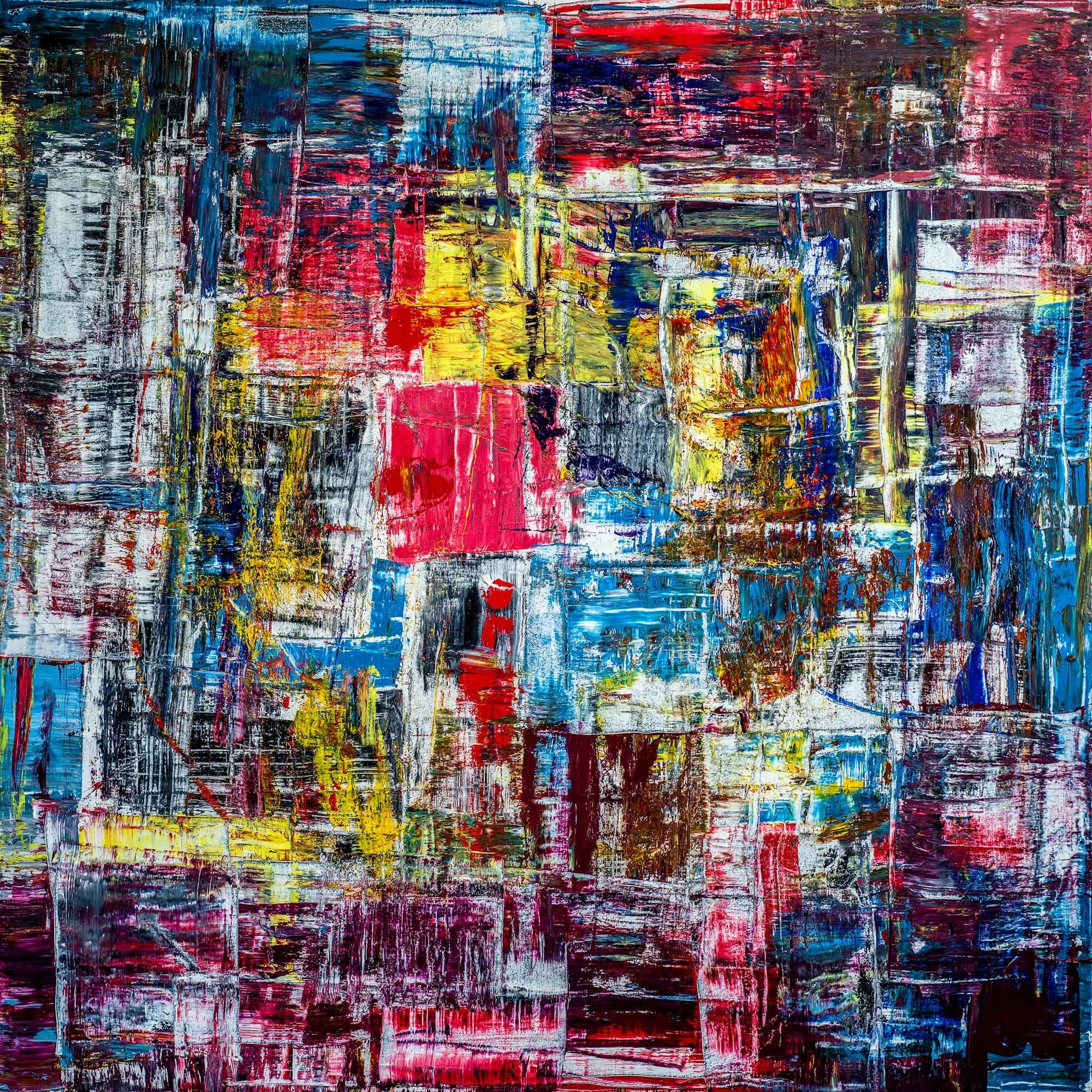
Reading the Field
There is an easy way to describe what I am building, and it is a ladder: read the painting, then the encounter, then — at scale — the field. I want to refuse the ladder. Abstraction does not work by ascent. It works by presence: the whole of it already folded into a single encounter, the way an entire image lives inside every fragment of a hologram.
A Taxonomy That Can Be Wrong
Isn't the feeling a painting stirs simply subjective — one person's awe, another's boredom? It is the strongest objection, and I want to meet it head-on. A framework that names a painting's feeling and then lets real viewers prove it wrong is doing something a poem and a machine both cannot: it can be caught in an error. A measure, not a mood.
The Man Who Walked In
I walked into a room of Rothkos as a particular person, and I do not remember leaving as the same man. This is an account of an afternoon I cannot fully account for — the numbness that was the opposite of absence, the door I walked out of, and the self I could not find waiting on the other side.
What Way of Being Does This Painting Invite?
They say the future is human-in-the-loop — the machine runs, and we stand by to approve. But to be in the loop is to be the most important person in a room you did not design. I am not interested in supervising the machine. I am interested in authoring the space it reads within.
Abstraction as Access
Abstract was never removal — it's a doorway. A reading of Erhard, Husserl, Heidegger, and Wittgenstein on abstraction as access, generated on canvas and drawn out in the engine.