How I Made Peace with Two Scary Words
Phenomenology and semiotics — undressed, and finally useful.
For a long time there were two words that could make me feel unqualified to stand in my own studio. I am an abstract painter. I have made a few hundred of these things. And still, when either of these words turned up in an essay about the very work I do, some small part of me quietly left the room.
The words were phenomenology and semiotics. They sound like the names of two rival law firms. They are, in fact, two ways of looking at a picture — and once you undress them, they are not difficult at all. In fact they turn out to be the whole quarrel at the center of abstract art, which is a good enough reason to make peace with them. So here is the peace I made.
Semiotics: the study of things that point
Semiotics is the study of signs — of how one thing stands in for another. A red octagon means stop. A dove means peace. The word tree is not a tree; it is five letters pointing at one. Read something semiotically and you treat it as a code: you look through the surface to the meaning waiting on the far side.
This is how almost all of us were taught to look at pictures, whether or not anyone used the word. What does it depict? What does it symbolize? What is it about? Every one of those questions is a little semiotic machine. It assumes the painting is a window, and that the point of a window is the view.
Phenomenology: the study of what happens to you
Phenomenology is the study of experience itself — not what a thing means, but what it is like to undergo it. It refuses to leave the room. It doesn't ask what the red stands for. It asks what happens in you when the red fills your whole field of vision and won't let go — the shift, the loosening, the odd quiet that arrives uninvited and overstays. Phenomenology treats that first-person moment as the real event, and declines to trade it for an explanation.
One word looks through the thing. The other stays with it. Hold that, and you already understand more than the fancy dress ever let on.
Why abstraction forces you to choose
A portrait hands you a who. A landscape hands you a where. They are windows; the semiotic habit works, and you cross over to the view without noticing you crossed anything.
Abstraction gives you nothing to look through. No sign pointing elsewhere. No coin to cash in for meaning. So when a person stands in front of an abstract painting and does the thing we have all been trained to do — hunts the surface for a smuggled rabbit, a face, a coastline, some resemblance that will prove they are allowed to be there — the door is locked. Not because they lack taste. Because they are knocking on the wrong door, asking the wrong question, in the wrong grammar.
The painting was never a sign. It was a situation. It doesn't want to be read. It wants to be undergone.
That single sentence is the whole turn. Stop reading abstract paintings and start encountering them, and the locked door was never a wall — it was a mirror. You were being asked to feel your own experience, not decode someone else's message.
This is also, quietly, my entire practice. I keep a phrase near me while I work: art that listens. A painting that listens is not trying to tell you something. It is making a space for something to happen to you. Which is just the phenomenological turn, said in studio clothes.
So I have made my peace with the two scary words, and I will tell you the terms of it. Semiotics is a fine tool for a world made of signs — menus, road signs, the flag over the post office. Phenomenology is the tool for everything that refuses to be a sign and insists on being an experience instead. Abstract painting belongs, stubbornly and gloriously, to the second list. It never owed you a meaning. It only ever offered you a morning you couldn't quite account for afterward.
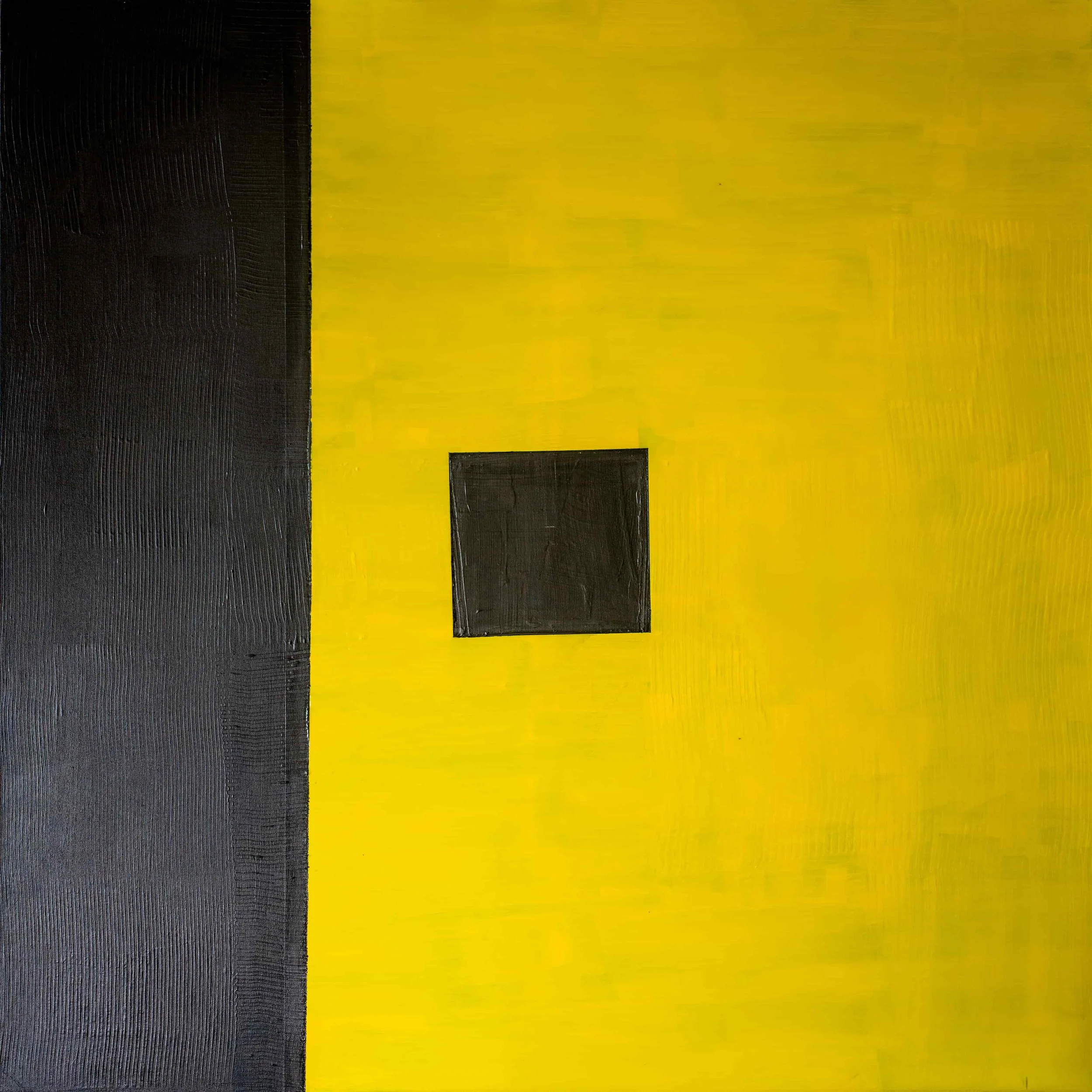
Ferrari Aperture