It is the best question anyone has ever asked me in the studio, and it usually arrives sideways. Someone has been standing in front of a painting for a while. They like it. They can tell they like it. And then, almost apologetically: how do I know this isn't just a mood?
They are right to ask. Most of what we respond to in a first encounter is speed — a color arriving fast, a composition that clicks shut like a good sentence. That response is real, but it is not durable, and the two are easy to confuse. A painting can be immediately likable and permanently finished with you inside a month.
What I have learned, from watching my own work leave the studio and from living with paintings that were bought by my father before I could read, is that the difference is visible on the first day. You just have to look for something other than pleasure.
The first test is whether the painting resolves.
Stand in front of it. Give it four minutes — genuinely four, not the forty seconds that feel like four. Then notice whether your eye has settled somewhere and stayed, or whether it is still moving.
A painting that resolves gives you its whole argument at once. Everything in it points toward a single conclusion, and once you have reached that conclusion, the painting has done its work. There is nothing dishonorable in this. Some of the most beautiful objects in the world are like this. But you will finish it, the way you finish a song, and then it will hang there having already been heard.
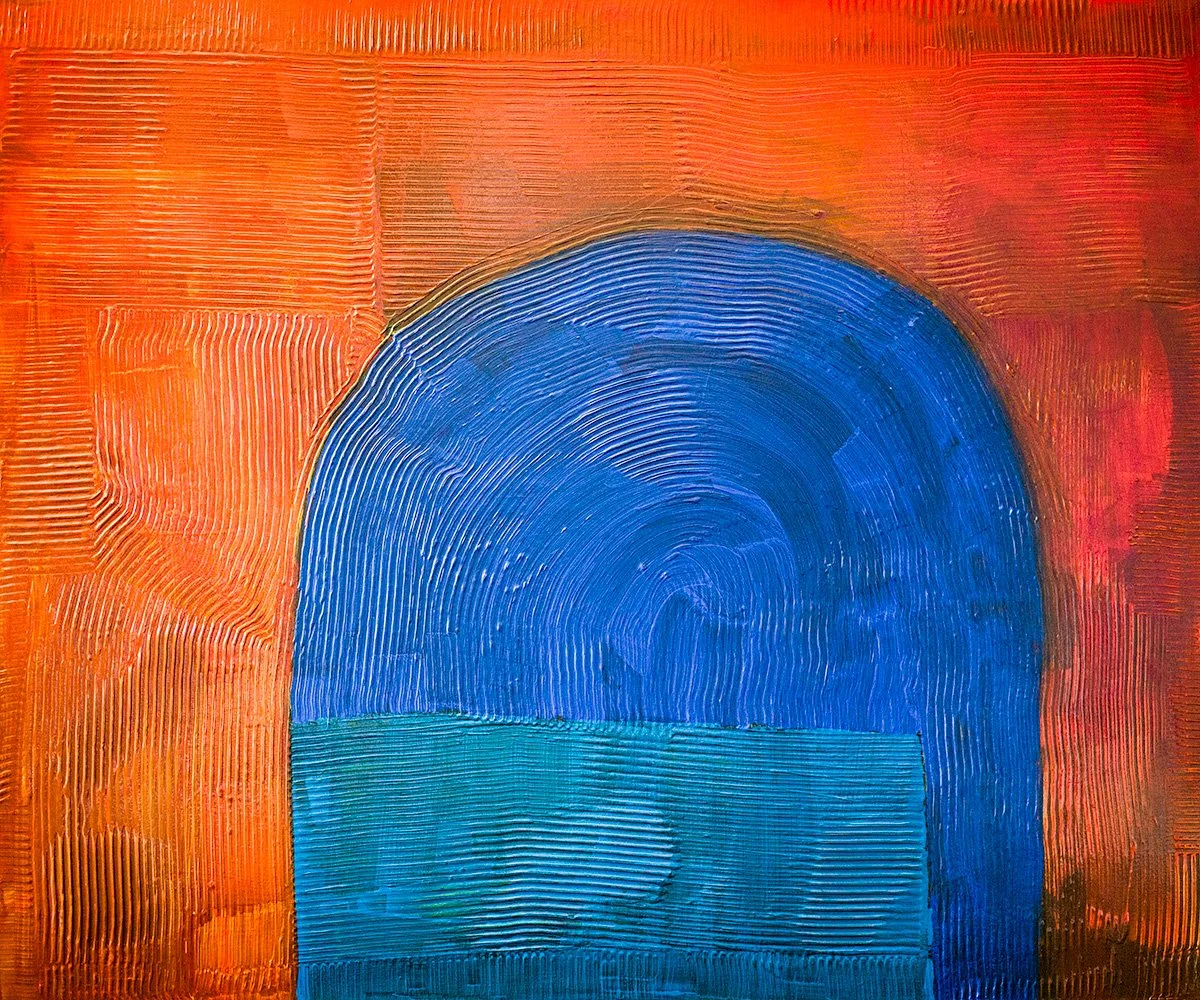
The Blue Sanctum · Acrylic on canvas · 6 × 5 ft · 2026
A painting that keeps opening never quite lets your eye land. Something in the lower left is unresolved against something in the upper right. A color appears twice and means something slightly different in each place. You look, you think you have it, and then a week later you walk past it in the wrong light and find a passage you had not registered at all. This is not complication. Some of my most inexhaustible paintings are nearly empty. It is unresolved tension held deliberately — the painter declining to close the argument.
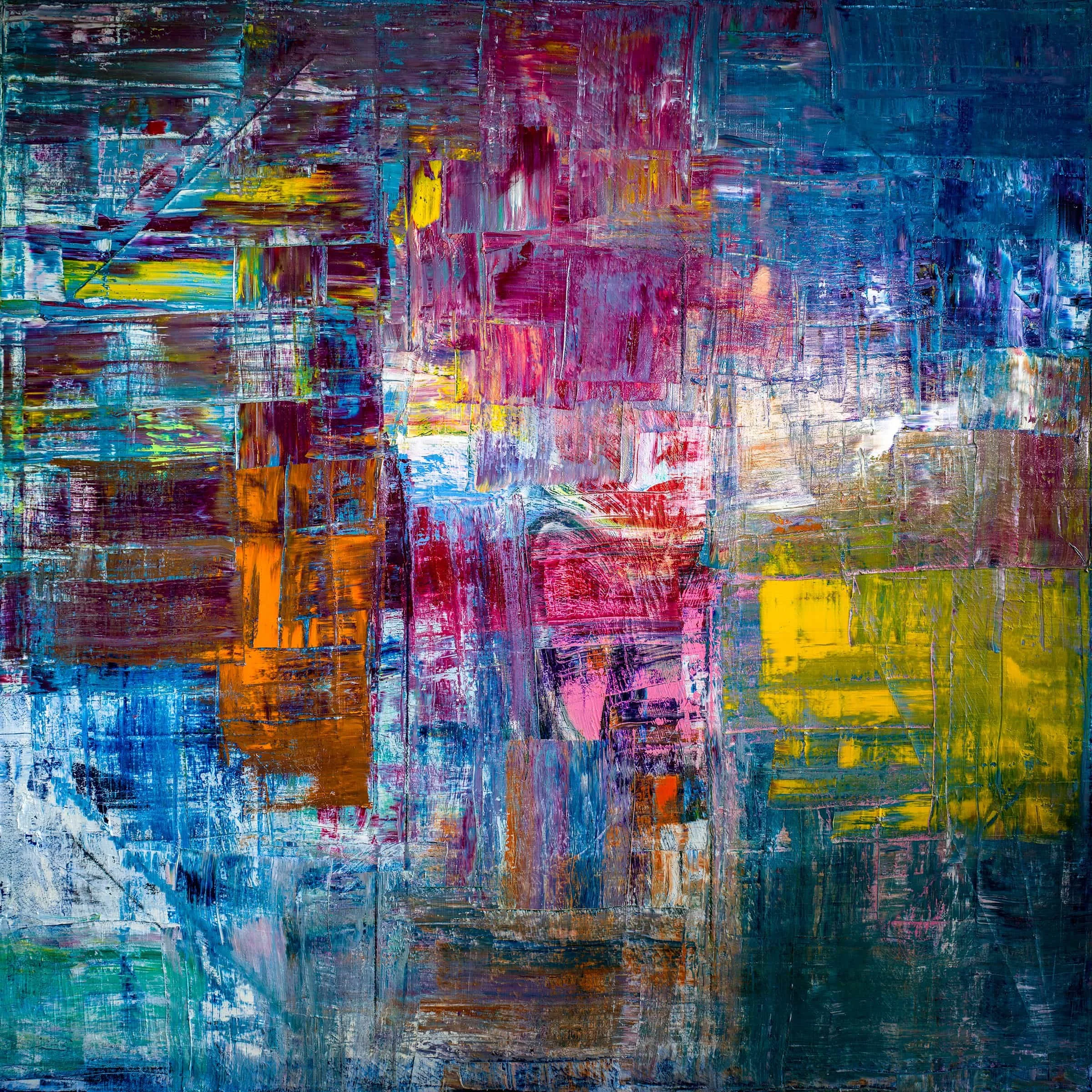
Fragments of Thought · Oil on canvas · 6 × 6 ft · 2026
The second test is whether you can describe it accurately.
Try to say what the painting is doing, out loud, to someone else in the room. If the description comes easily and completely, be careful. If you find yourself starting over — no, that's not quite it — that hesitation is a good sign. It means the painting is doing something your language hasn't caught up to. Language catches up eventually. But a painting that outruns your first description will keep outrunning it for years, and that gap is where long love lives.
The third test is the one people find hardest, so I'll put it plainly.
Ask yourself what the painting feels like, in one word, and then ask whether you want to feel that regularly.
Not whether you enjoy it. Whether you want it in the room. There is a difference between a painting that gives you awe and one that gives you restlessness, and both can be extraordinary, and only you know which one your hallway can carry at seven in the morning. I have watched a collector fall hard for a painting full of defiance and then, six months in, quietly move it from the bedroom to the office — where it turned out to be exactly right, and where it has stayed for years.
That was not a failure of judgment. It was a failure of placement, which is a much smaller thing and entirely fixable. But it is worth knowing in advance which register you are inviting in.
A note on the paintings that have already lived.
Some of the work leaving this studio now was made over older canvases — paintings I had finished, lived with, and eventually outgrown, which then became the ground for something else. I have started calling them the transformed.
I mention them here because they are the most honest possible answer to this question. They are proof that even a painter's love for a painting can end, and that the ending is not a catastrophe. Something can be genuinely good and genuinely finished with you. What matters is whether, underneath, there was enough to build on.
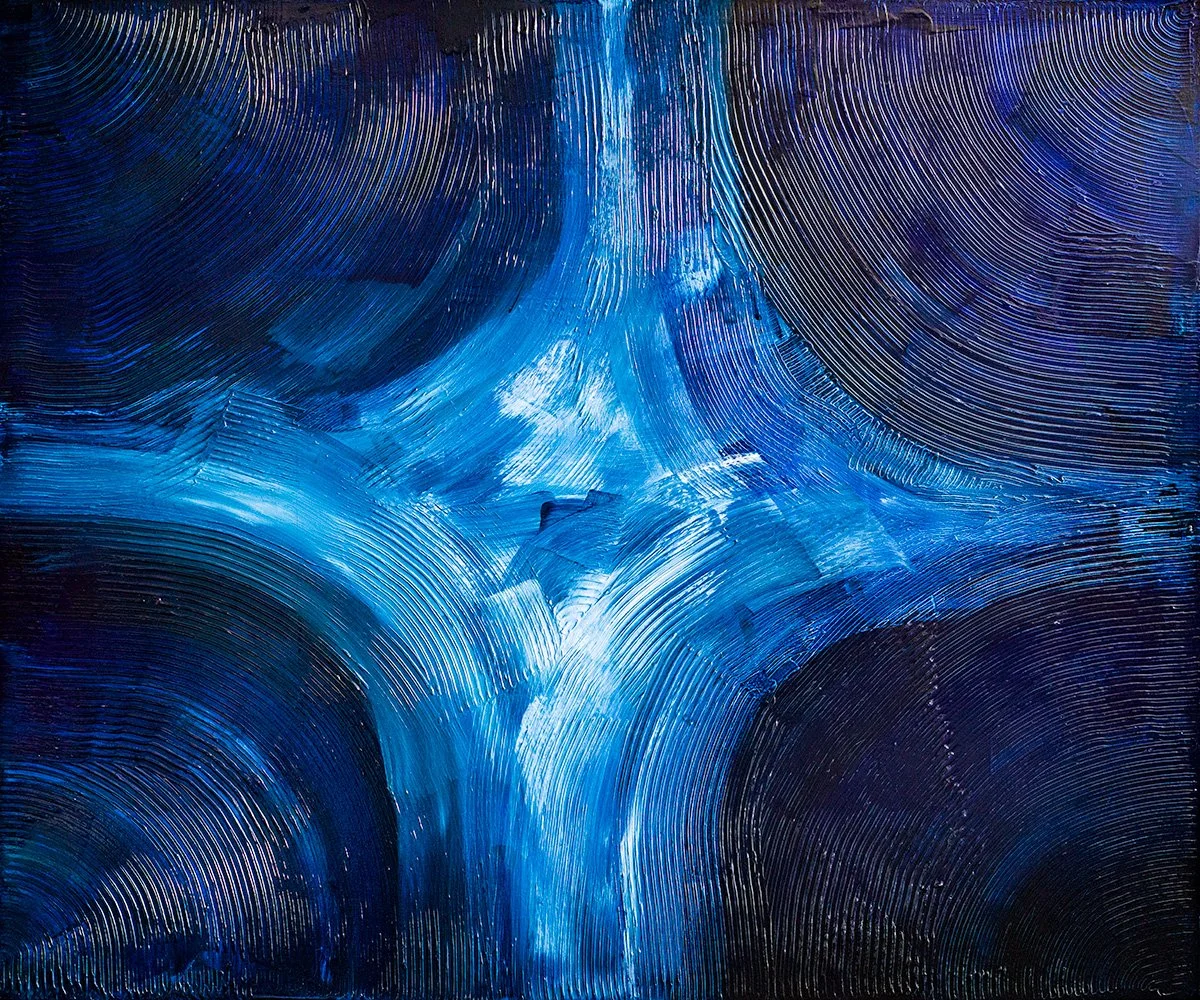
The Sangam · Acrylic on canvas · 6 × 5 ft · 2026 · Transformed from Spiraling (2022)
That is the real thing to look for. Not whether you love it now — you do, that's why you're standing there — but whether there is more in it than you have yet used.
If you can't tell.
That is normal, and it is the reason the concierge exists. It asks about feeling rather than style, because feeling is the thing that persists and style is the thing that changes. Most people are surprised by where it takes them. The painting you would have chosen from the wall is rarely the painting that has been waiting for you.
But if you would rather do it yourself, here is the shortest version I can give you:
Buy the painting you cannot fully describe.