Journal · Studio Voice & Philosophy
Four Ways to Make Blue Deep
What a Gallery Label Cannot Tell You About Blue
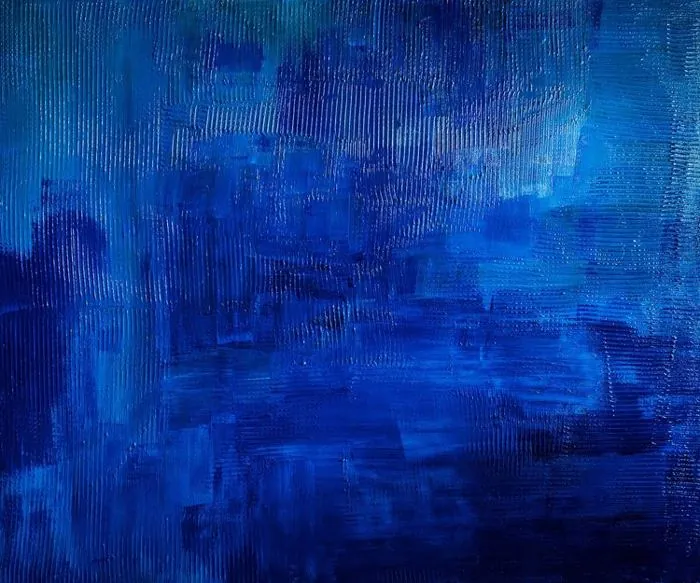
The same four, as ArtGram
Two dimensions, two different paintings
Thehrav and Sea Change are the same size. Six feet by five, both of them, hung on the same wall a foot apart. Both blue. Both made this year.
Three of the six readings are identical. Same texture, same form, same distance from representation. On paper they are nearly the same painting.
Two dimensions carry the entire difference. Contrast, and Colour Range.
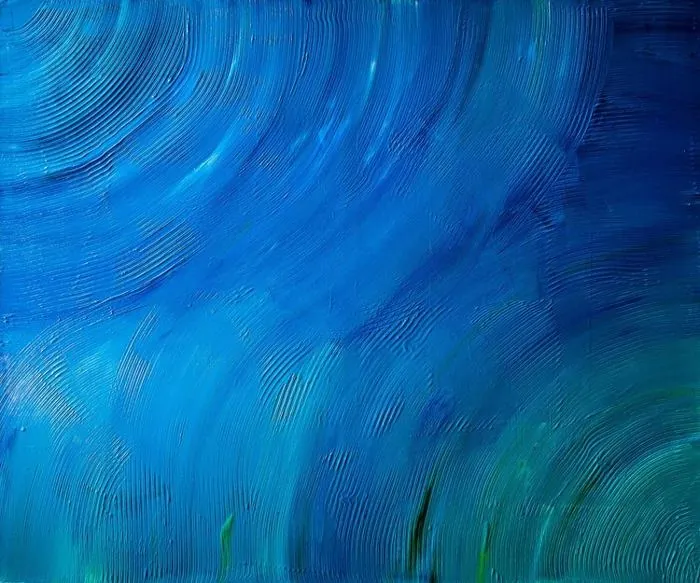
And look at what those two do. Thehrav is a Keel — a tall shape leaning right, dense and dark, the whole range of one blue falling from azure to near-black. Sea Change is a Fan — wider, lighter, opening toward the left, with a green band at its edge that is the last surviving trace of the hills it used to be.
That is the whole point of the thing. A description that only sorted paintings by colour would file these four together and stop — four blue abstracts, roughly the same size, nothing more to say. A description that reads six dimensions instead of one finds four different objects, and puts the difference on the wall where you can see it before you read a word.
What the four are doing
Thehrav goes down. One blue taken as far in each direction as one blue goes, so the eye reads tonal distance as physical depth.
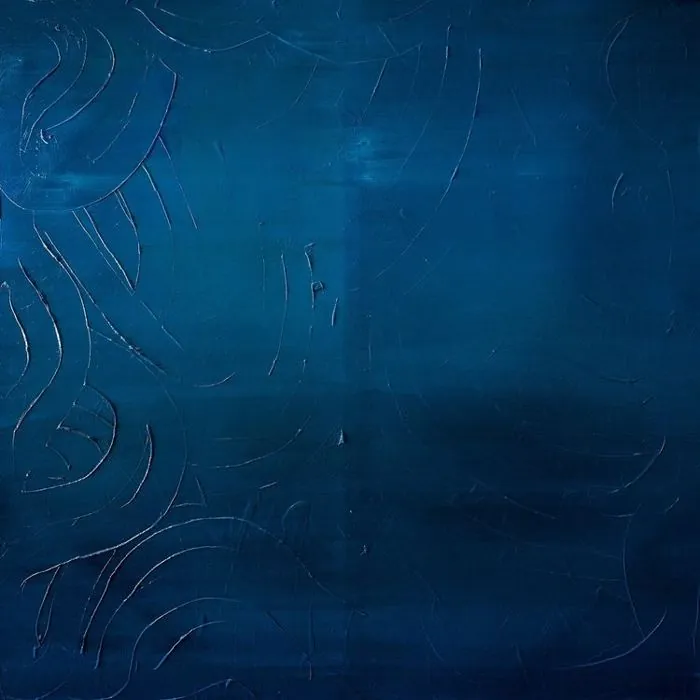
Neelkanth goes out. Its blues sit close together and its depth is in relief — incised arcs catching a raking light, which is why it looks nearly flat in a photograph and is not flat at all in a room.
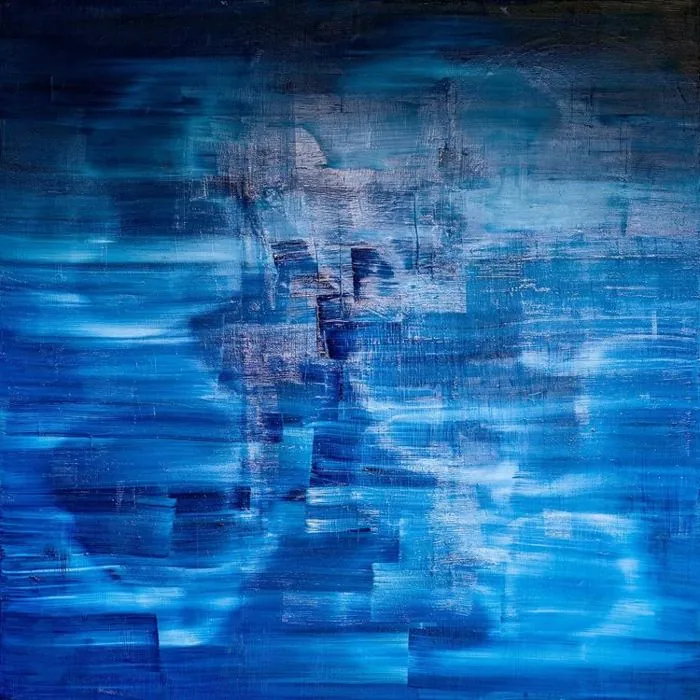
Submerged Structures goes in and out. Architecture surfaces and is taken back before it resolves, and the distance comes from the not-quite-arriving.
Sea Change inherited its depth. It began as a landscape and failed as one, and what stayed behind is the fall — recession without a subject to recede.
Four ways to make a blue field deep, and not one of them is colour.
What the records leave out
A gallery label records the medium, the size, the year. A catalogue raisonné adds provenance, exhibitions, where it has hung.
Neither of them reads the painting.
Not one field in either would tell you that Thehrav falls to near-black while Sea Change stays in the light — the single fact that makes them different objects on the same wall. Six feet by five, oil and acrylic, blue and blue.
That is the space the ArtGram is for.
All four are in the Abstract Inquiry collection.